
Introduction
The AFA™ GAZ and MALSO modules have a variety of automated solutions for highly complex engineering workflows. This is includes the introduction of the automation transient methods and related workflows - also great tools for reservoir performance analysis and production forecasting.
Automated Type Curve Analysis
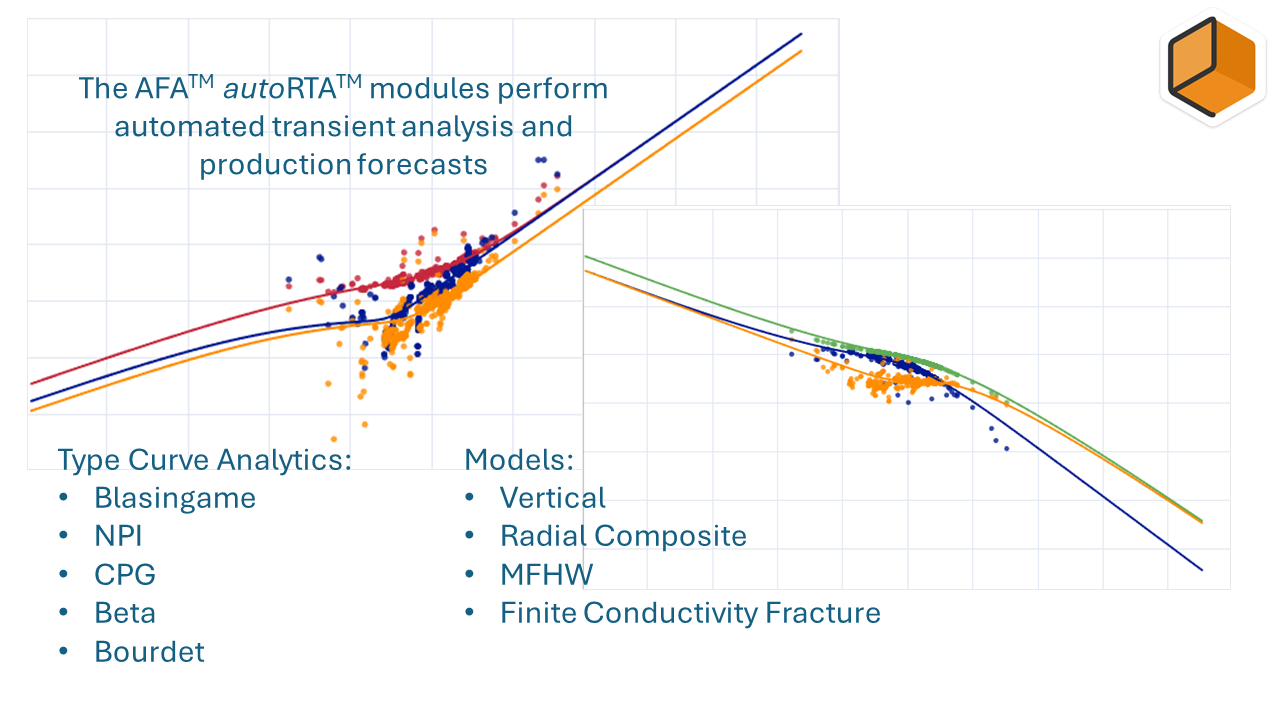
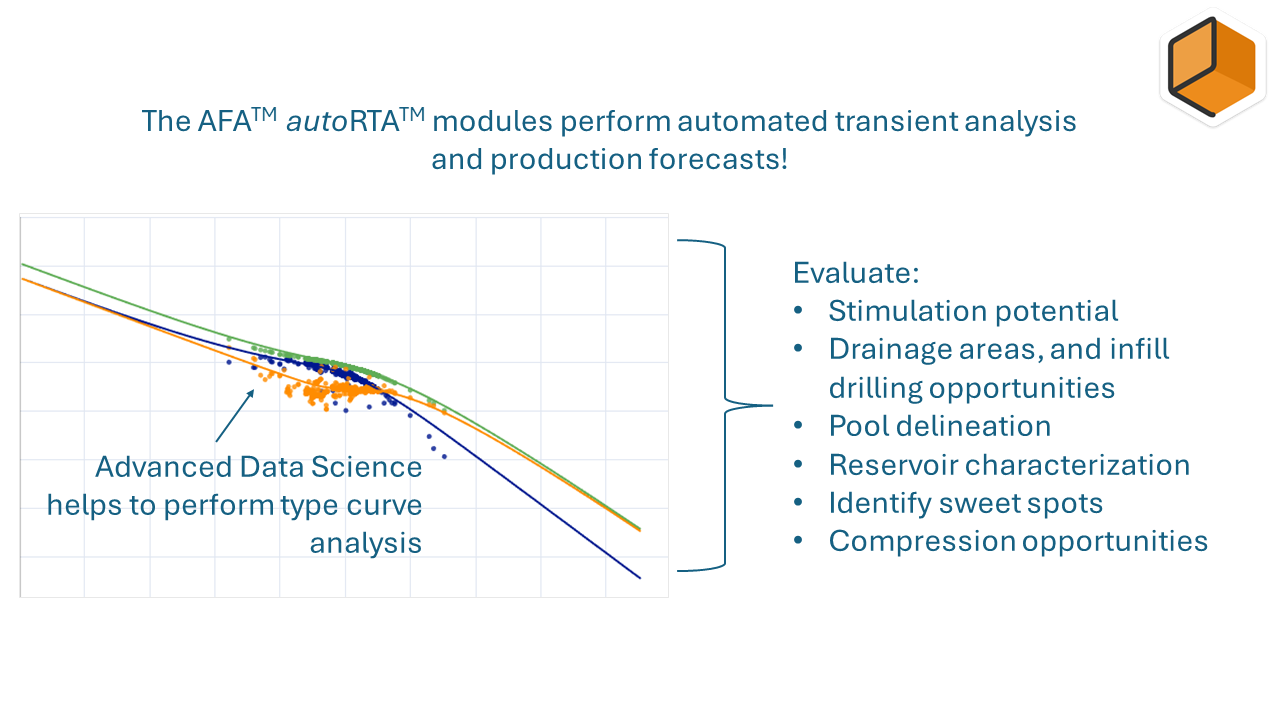
Using advanced data science and/or machine learning, the traditional method of manually performing RTA type curve matches, following by forecasting can be automated by the AFA™ platform.
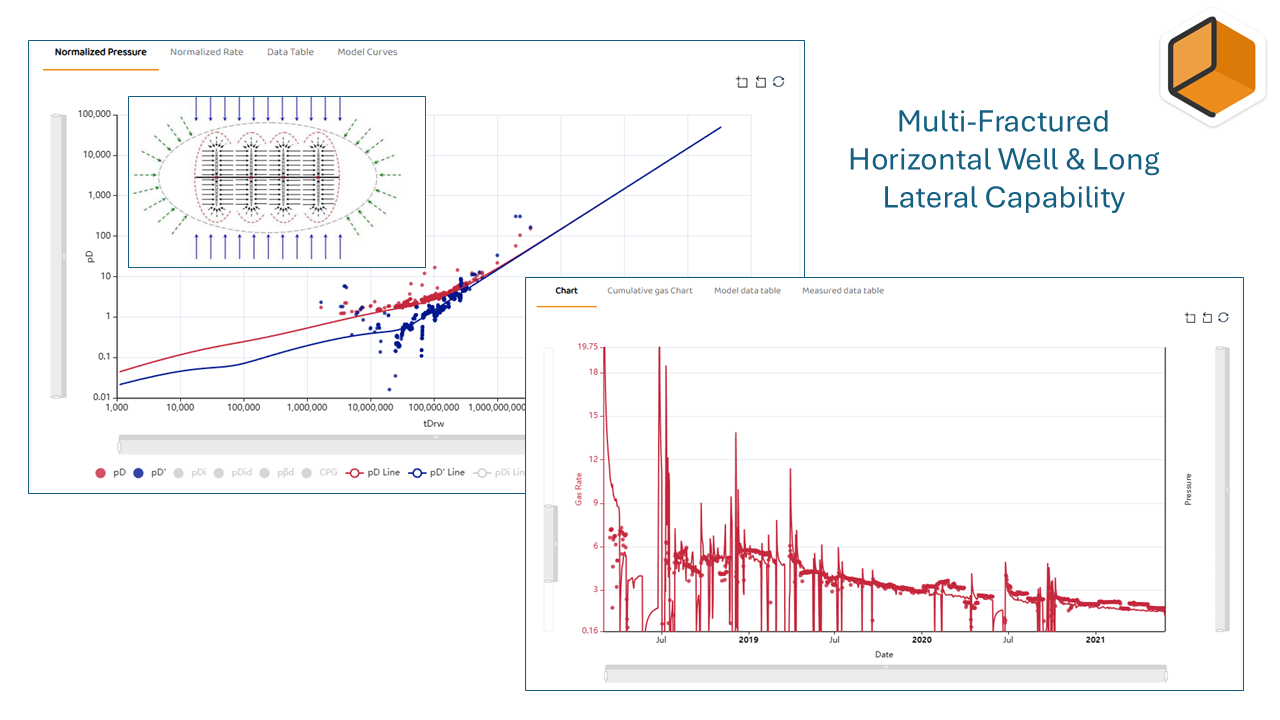
MultiFractured Horizontal Well (MFHW) Capability
AFATM has MFHW capability that allows for custom number for fractures and frac lengths along the well. The model will handle all flow regimes, pre and post inter-fracture interference.
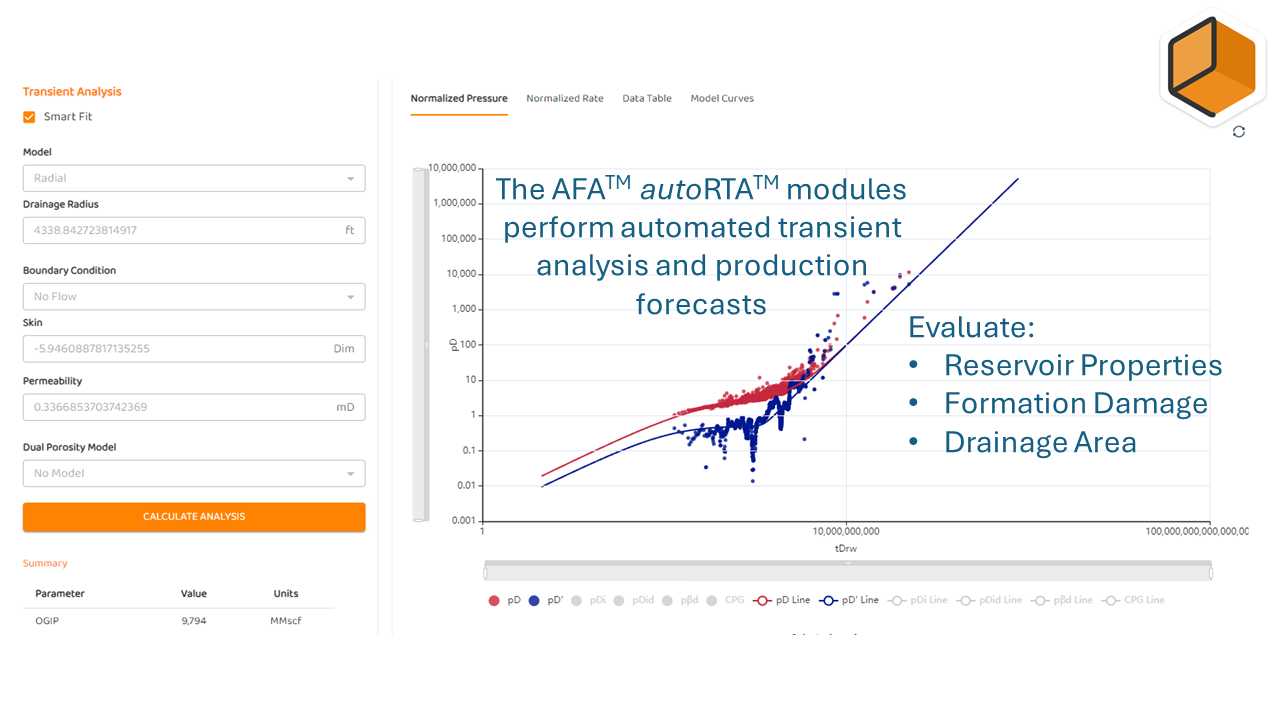
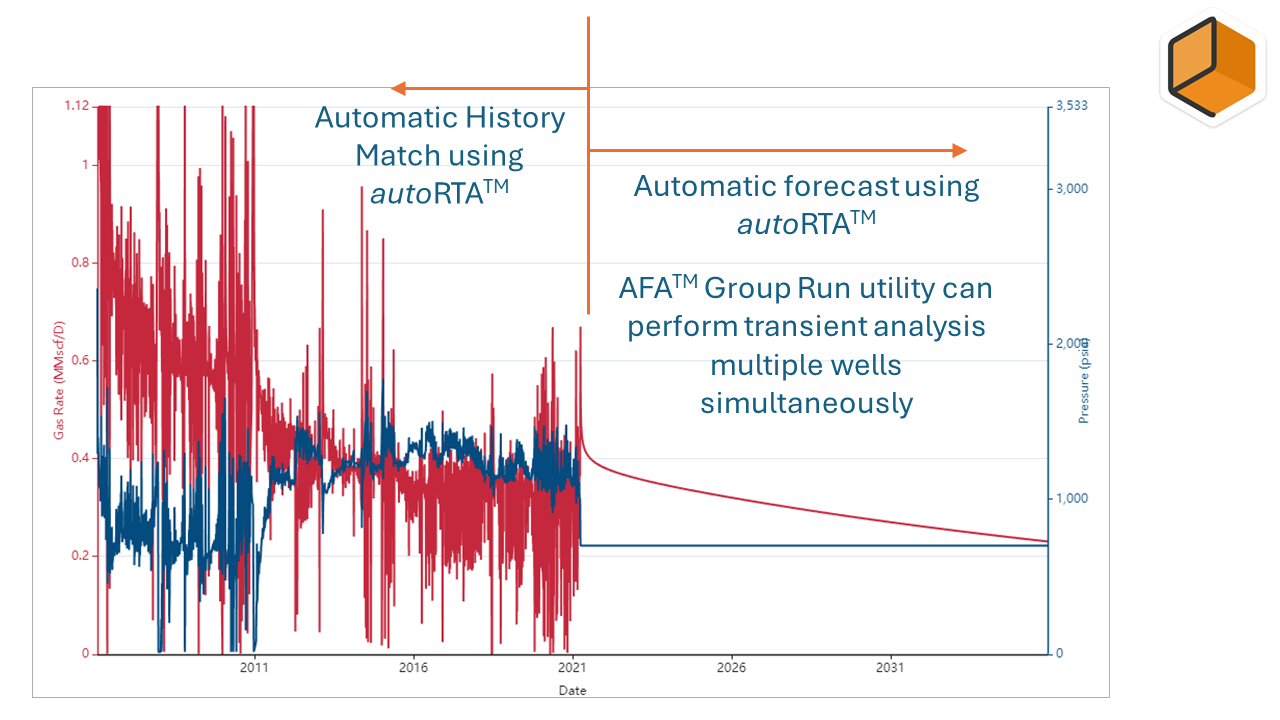
Automated History Matching & Forecasting
Both automated analysis, history matching, and forecasting represents a substantial improvement workflows, compared to traditional methods. After easily performing an automated type curve for the transient and PSS parameters, the forecast is can be automatically generated. Anchor to pressure or rate constraints.
Types of Models
Currently, the following features/models are enabled in AFA™ autoRTA for both oil and gas. These models have applications for both conventional and unconventional systems.
|
Model |
Dual Porosity |
Boundary Condition |
|---|---|---|
|
Vertical Well (skin-perm) |
Yes |
|
|
Finite Conductivity Fracture (Vertical Well) |
No |
No Flow
|
|
Uniform Flux Fracture (Vertical Well) |
Yes |
No Flow |
|
MFHW |
Yes |
|
|
Radial Composite |
Yes |
|
|
Closed Linear Reservoir |
Yes |
|
|
Multi Fractured Horizontal Well |
Yes |
|
autoFMB
The automation capabilities of AFA extend to include automated Flowing Material Balance (autoFMB). The AFA platform automatically evaluates P10, P50, and P90 (low, mid, and high) scenarios for Original Gas in Place (OGIP), productivity, reservoir flow capacity, and more. Within the AFA™ platform, three full Flowing Material Balances (FMB) are simultaneously analyzed, providing comprehensive and efficient assessments of reservoir performance.
Watch the Video to learn more