
Introduction
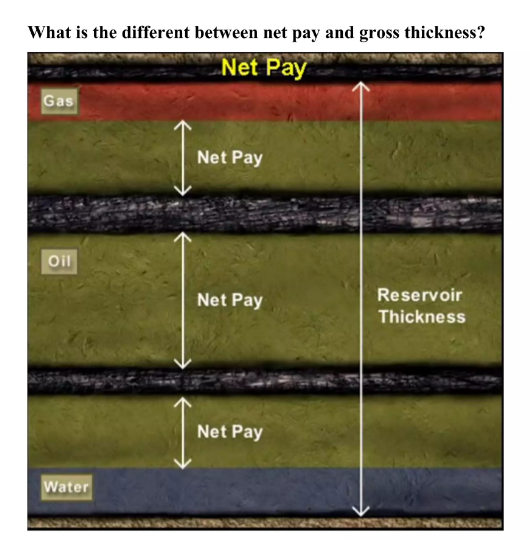
Net pay is the thickness of the formation that contributes to the flow of fluids. It can be determined from core or log analysis, mud losses, formation pressure, and other emerging technologies.
This is different than gross thickness (I.e. reservoir thickness) which is the total thickness of the stratigraphically defined interval in which the reservoir beds occur, and includes the non-productive intervals. In other words, the entire thickness for the whole reservoir.
Discussion
The definition of net pay can be difficult when one considers the contribution of:
-
Shaley Intervals:
-
Low Porosity:
-
High Water Saturations (low hydrocarbon content)
According to the SPWLA, net pay is defined as the portion of reservoir rock which will produce COMMERCIAL quantities of hydrocarbons.
There is also discussion on CSG Measures and Layers
Some Idealized Scenarios are shown below:
CSG and Net Pay:
Often, CSG net pay is determined by Coal Density and related cut-offs.
See Also:
Core Photos for examples of net pay, porosity, and fluid filled porosity (saturations)
Related AFA Engineering Calculations:
Most of the AFA engineering equations actually use a KH product, and not net pay or permeability independently (other than possible volumetric calculations). In modules such as Flowing Material Balanceor Transient Models & Flow Regimes , one can find that varying net pay can have zero effect on the history match or forecast.
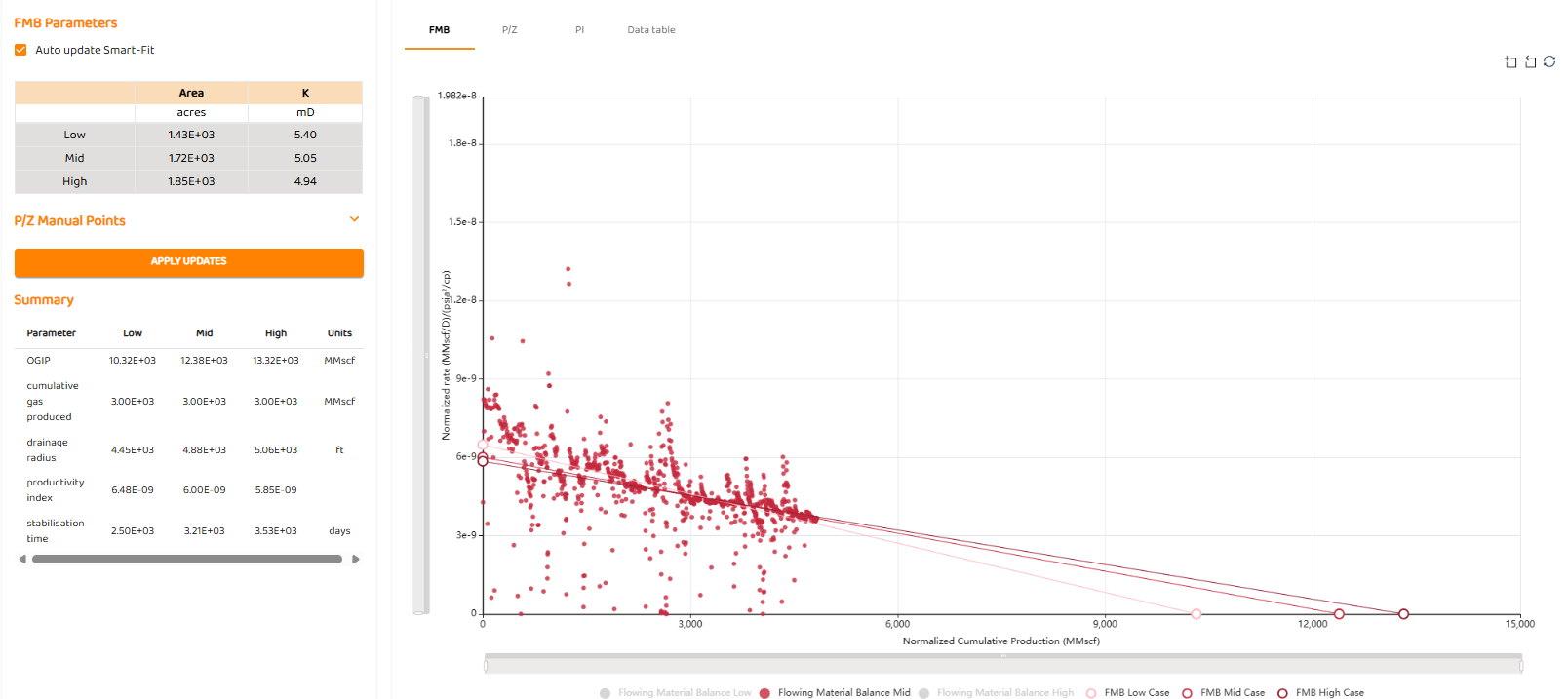
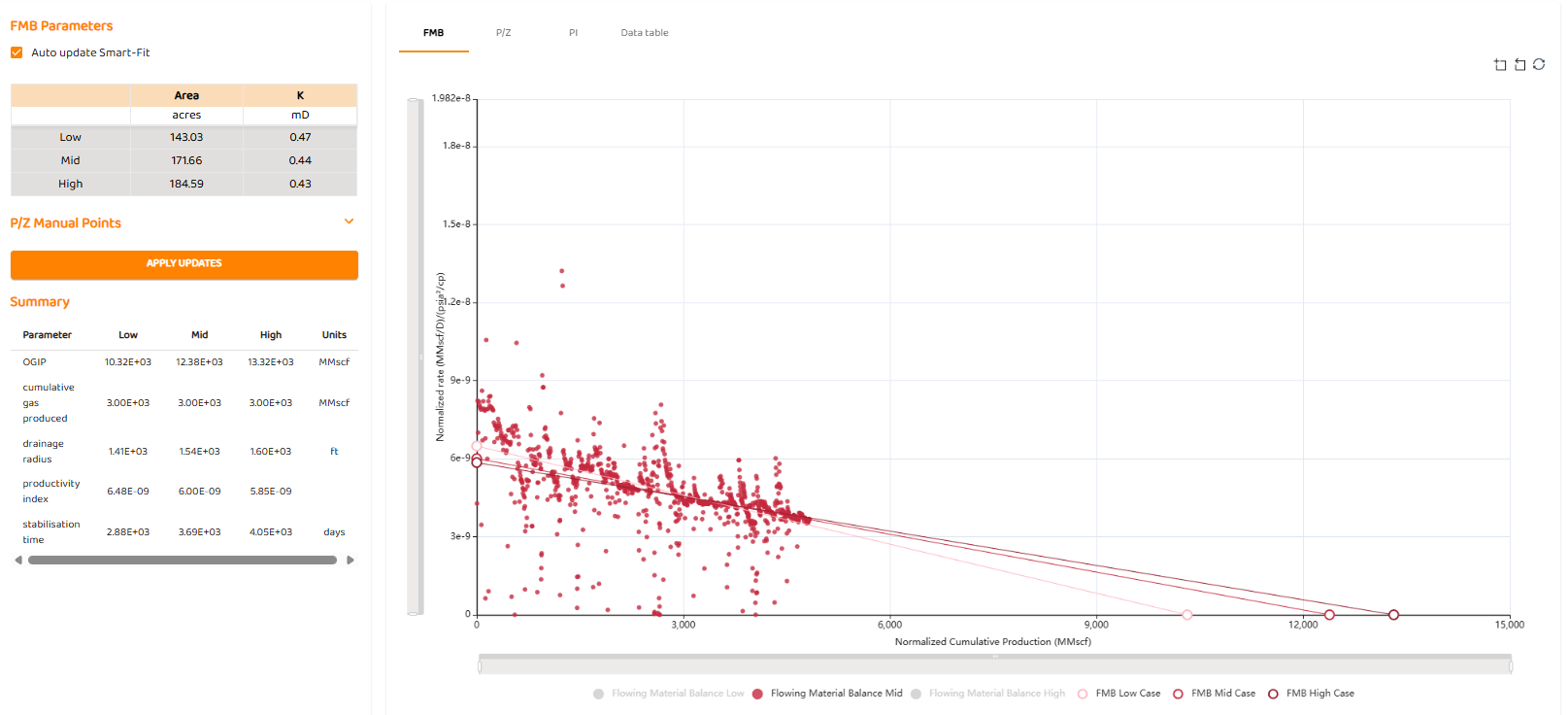
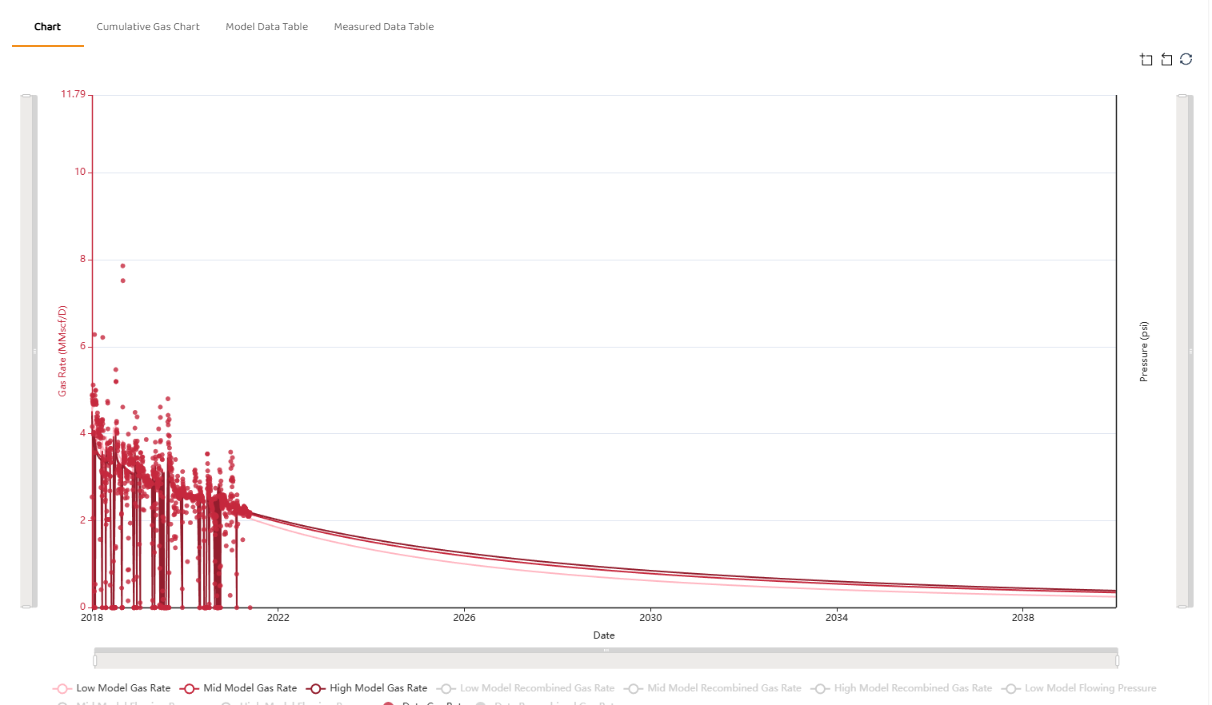
In the Montney Shale gas example below, the FMB analysis was evaluated with two different net pays. As can be seen, both the analysis and forecast are identical!
|
Example 1: |
Example 2: |
|---|---|
|
Net Pay = 10 ft |
Net Pay = 100 ft |
|
|
|
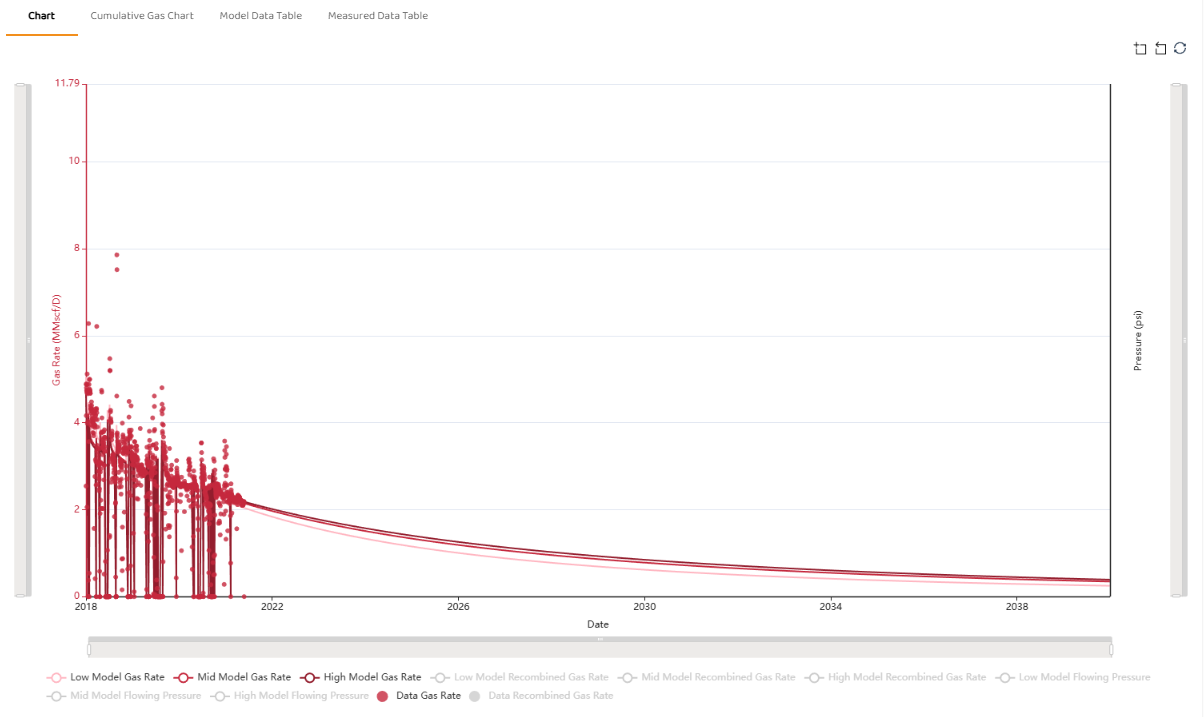
|
|
Kh = 5.05 md.ft |
Kh = 44 md.ft |
|
PI = 6.00E-09 MMscf/(psi.cp^2) |
6.00E-09 MMscf/(psi.cp^2) |
An analyst might question “So why do we care about net pay”. The answer is that back-calculated properties such as those listed below are different. The overall productivity (or Productivity Index (PI) ) of the well is honoured, but back-calculated properties are different.
Permeability - which affects comparisons to core, log derived permeability, and other related methods
Drainage Radius -which affects decisions about well spacing and infill drilling.