
Introduction
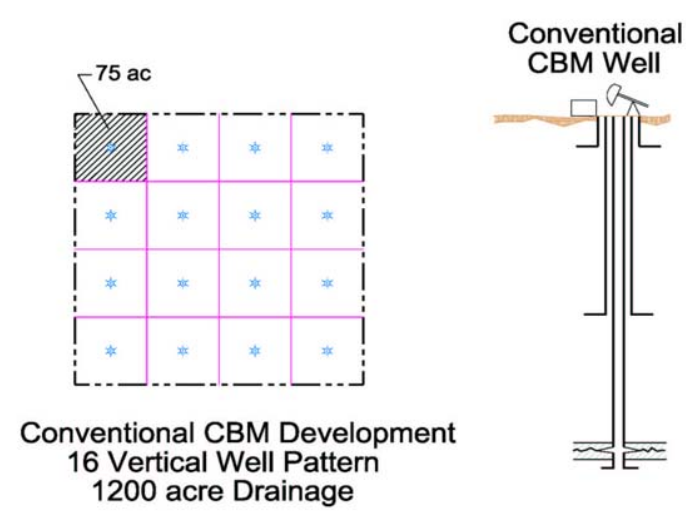
The application of multi-lateral horizontal wells in CBM recovery began in the early 1990’s, where CDX created a unique well pattern to aid in dewatering. The CDX “Pinnate” well design drilled from one location on a 1,200-acre drilling unit replace up to 16 conventional well sites that are drilled on 75-acre spacing - in otherwords, the design replaced a significant number of surface disturbances with a single surface disturbance. Starting in 2004, similar approaches were used in China.
Not only does the Pinnate Technology require considerably fewer well locations for a given area, but each well site also needs less space than a conventional drill pad. As a result fewer drill pads, fewer roads and pipelines need to be laid to drain the same area as conventionally developed CBM fields thus lessening the environmental impact of the drilling and production operation. The cumulative footprint of a Pinnate development is roughly 10% as large as that required for conventional vertical CBM wells. According to Funmilayo (2010), this pattern is better suited for low permeability systems and that lateral collapse has been observed in higher permeability formations.
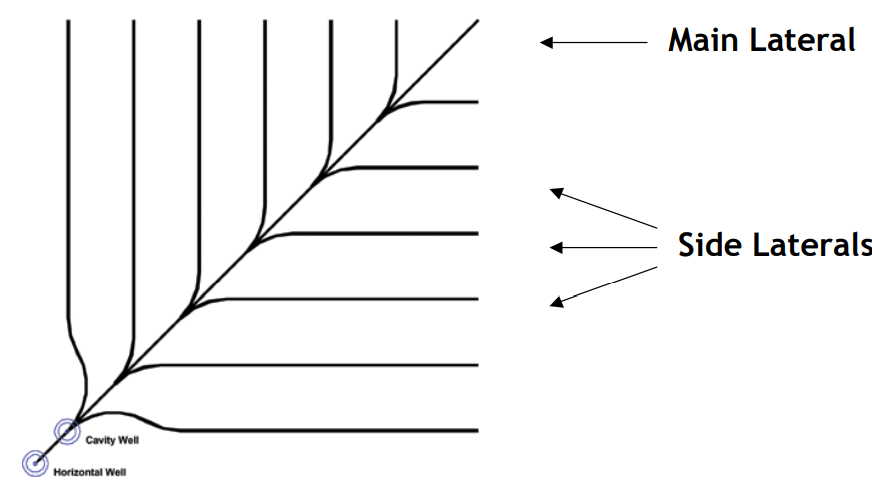
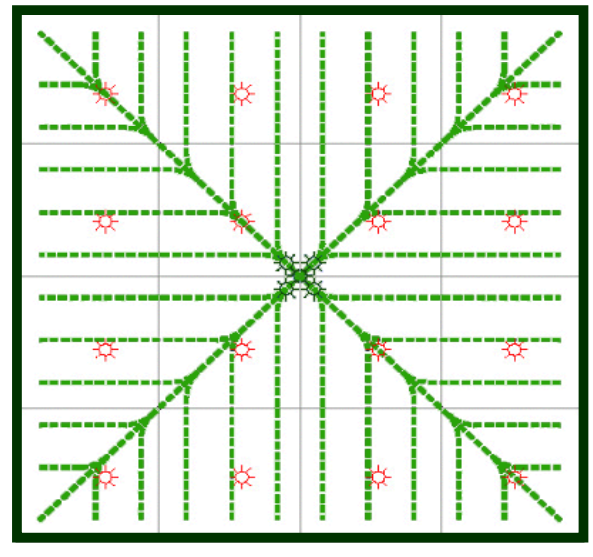
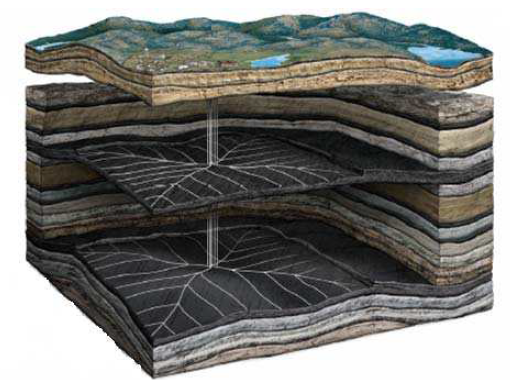
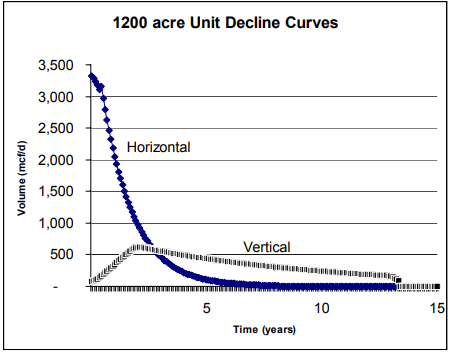
Using Simulation [Hilmar von Schoenfeldt et al, n.d], it was shown that the benefits of using this approach resulted in substantial initial rates with essentially no dewatering approach (gas is produced immediately). Significant pre-design must be done to ensure that this results in a postive economic scenario. Hwoever, Schoenfeldt have shown such wells may collapse easily in high permeability coals.
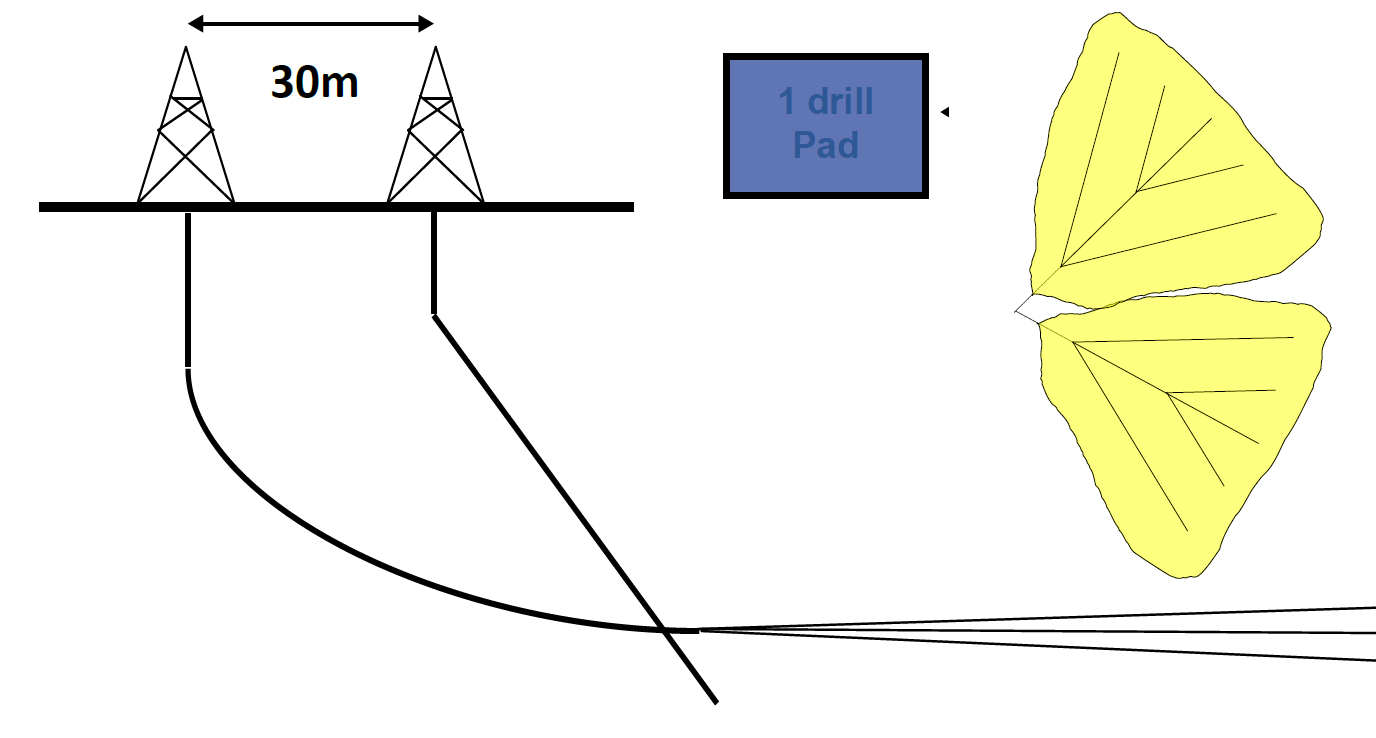
Dart Energy International, used a multi-lateral “In-seam” well for their Liulin project, Ordos Basin, China. The completed multiple thin, low permeability coal seams. The specifics were:
-
2 inseam wells, each with up to 8,000 m of total lateral length
-
Up to 3 layers
-
Drilled with multi-lateral surface-in-seam wells
-
Slant Wells provided the production conduit.
-
All operations from a single pad, minimizing surface footprint
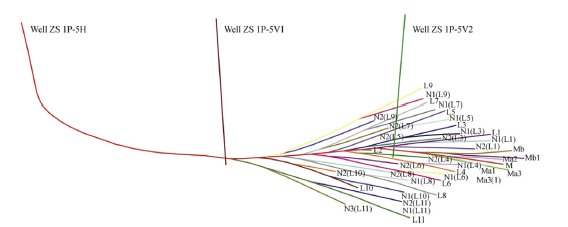
Inspired by the Pinnate Design, the following field / pilot trial was published in 2015 for the Quinshi Basin
References:
-
Hilmar von Schoenfeldt, Joe Zupanik, Doug R. Wight, and Scott H. Stevens, Unconventional Drilling Methods for Unconventional Reservoirs in the US and Overseas, n. d.
-
Stevens, S.H., China Coalbed Methane Reaches Turning Point. Oil and Gas Journal, January 25, 1999, p. 101-106.
-
Yang Y, et al., A new attempt of a CBM tree-like horizontal well: A pilot case of Well ZS 1P-5H in the Qinshui Basin, Natural Gas Industry B (2015),
-
Simon Potter, Dart Energy, Investor Presentation, March 2011.