Introduction
There are multiple routes or pathways for calculating PBHP (see image below). PBHP can be estimated as shown in the table below.
|
Type of Well |
Source |
Description |
|---|---|---|
|
Pumped (Tubing Pressures not applicable)
|
Pump Intake Pressures |
|
|
Pump Intake Pressures + Wellbore Model |
|
|
|
Casing Pressure + Liquid level |
|
|
|
Flowing |
Tubing or Casing Pressure + Hydrostatic Gradient + Losses |
|
|
Tubing or Casing Pressure + Model |
|
|
|
An estimated flowing pressure s better than no pressure! If there are missing data or gas, do not worry and let Predico data science handle these issues for you. |
||
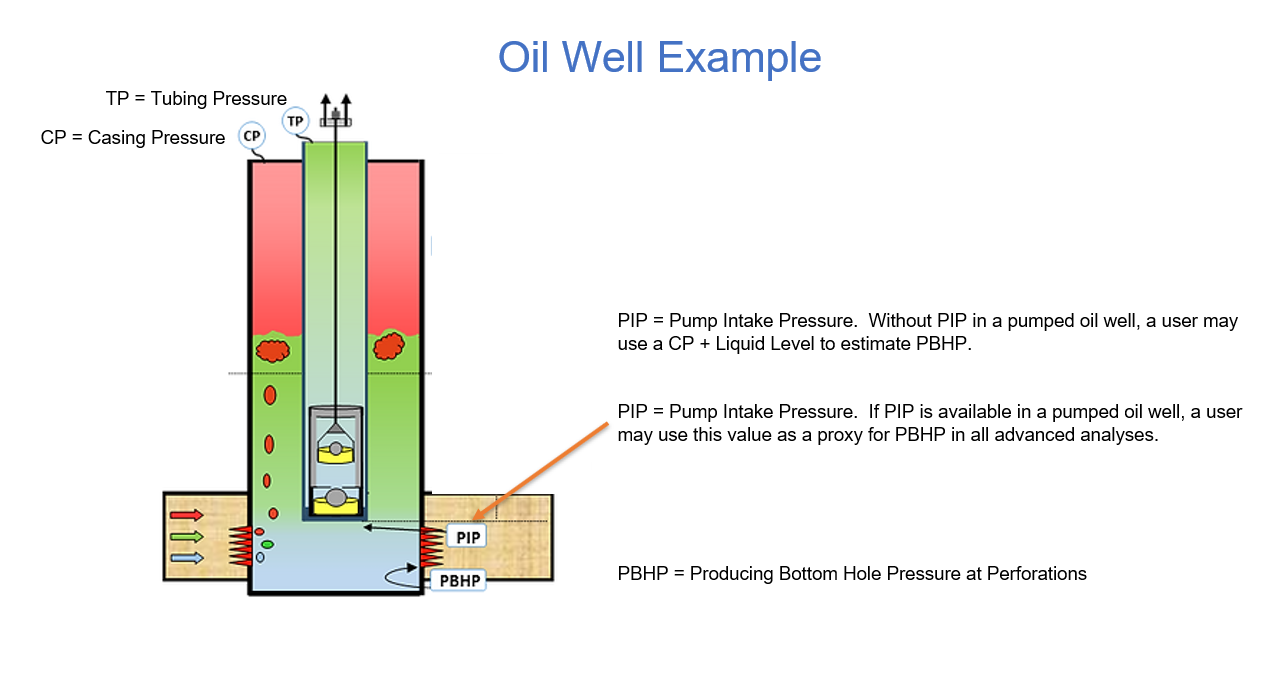
Simple Oil Well Example Illustrating Different Types of Pressure
Pressure “Hacks“
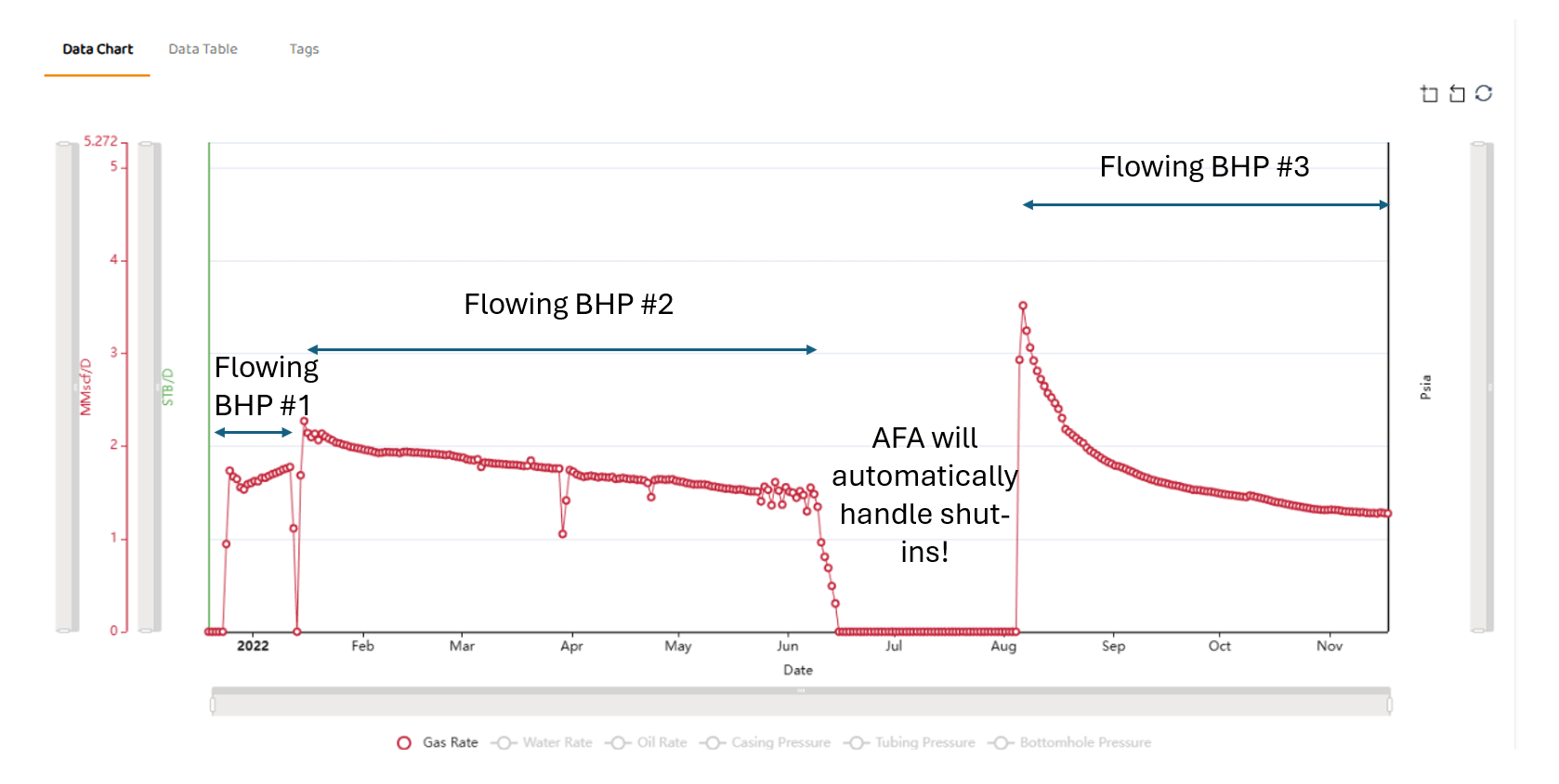
Quite often detailed pressure data is not necessary, and few approximations can be used. In the gas example below, we see three (3) distinct pressure trends as marked. Three basic flowing bottomhole pressure estimates could for this well for physics based analysis.
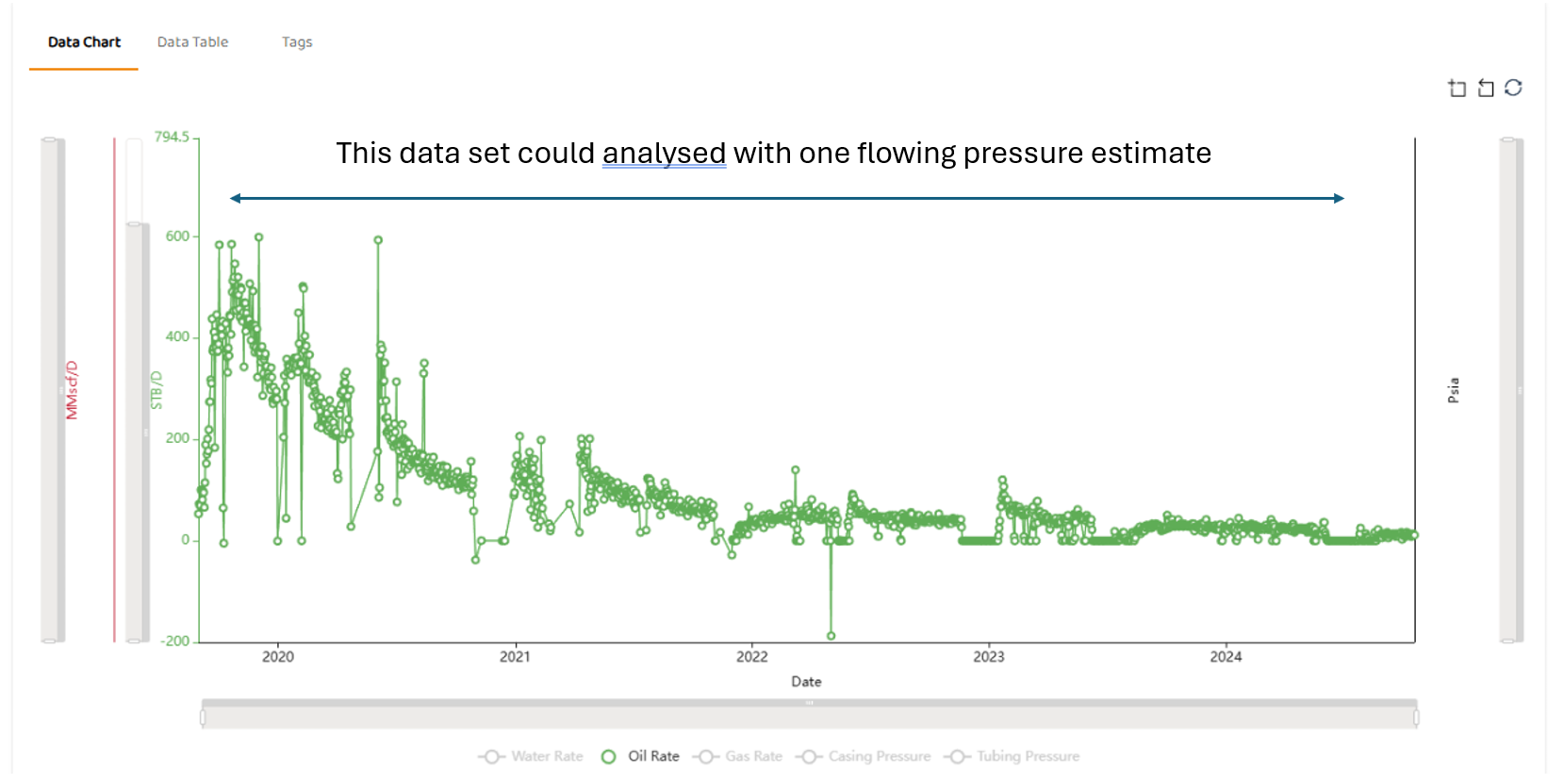
In the second example, an oil well, it is possible to perform the analysis with a sole pressure estimate. Remember, an approximate value of pressure is better than no pressure!