
Introduction
Shale porosity can often be described with multiple levels of porosities:
-
Inorganic porosity
-
Organic porosity
-
Natural micro-fractures
-
Artificial fractures
The exact pore network makeup therefore depends heavily on the organic and inorganic content and composition, as well as thermal maturity of the shale. The primary constituents of organic- rich shales are quartz, clays, carbonates, feldspars, apatite, pyrite, and organic matter.
It should also be noted that free- and adsorbed-gas storage may occur simultaneously in certain pore size ranges, which has been discussed in association with organic matter pores in shales
Shale Porosity Values
The plots below show the range of porosity sizes for that can be encountered from conventional sandstone to shales. It is accepted that the concept of pores and pore throats begin to break down at such small scales.
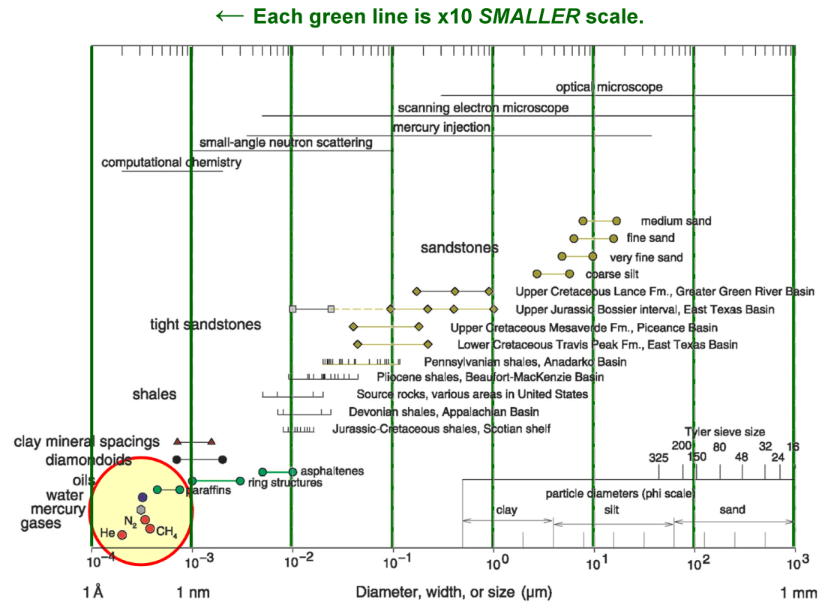
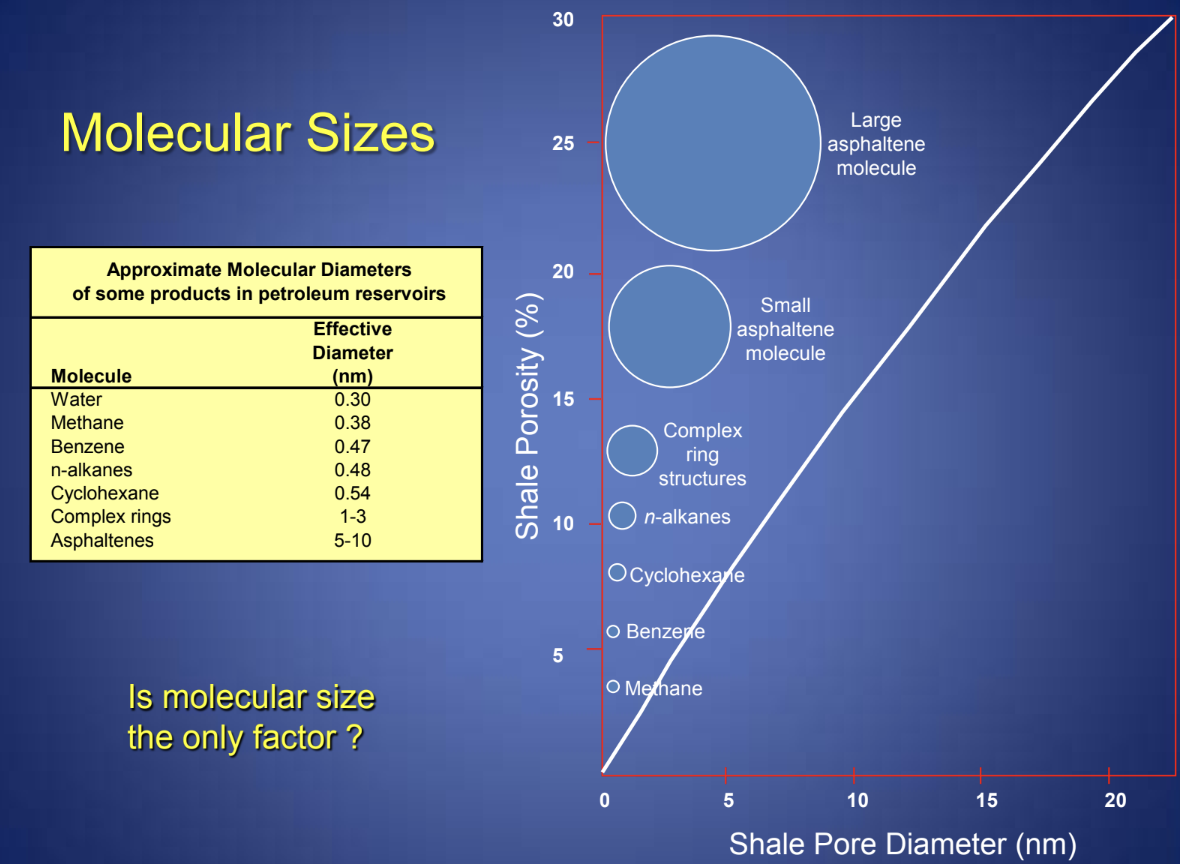
According to Satter & Ghulam [2016], most shale gas reservoirs, porosity is relatively low, often ranging between 2% and 6% [however, porosity of shale up to 10% has been reported in certain cases].
See Also:
See Also:
Core Photos for examples of shale porosity, conventional porosity, vuggy porosity, and more.
References:
-
T. A. Blasingame, Reservoir Engineering Aspects of Unconventional Resources, 20 April 2020, Covenant University (Nigeria).
-
Daniel M. Jarvie, Unconventional Shale Resource Plays: Shale-Gas and Shale-Oil Opportunities, Fort Worth Business Press Meeting, June 19, 2008.
-
Satter & Ghulam, Reservoir Engineering The Fundamentals, Simulation, and Management of Conventional and Unconventional Recoveries, 2016.