Introduction
The initial reservoir pressure (Pi) is the average pressure of a reservoir before any production begins. It's a key value in reservoir engineering calculations, such as determining reserves.
Related AFA Engineering Calculations:
In many of the AFA physics-based applications, initial reservoir pressure has a significant impact on material balance calculations and associated OHIP/OGIP/OOIP.
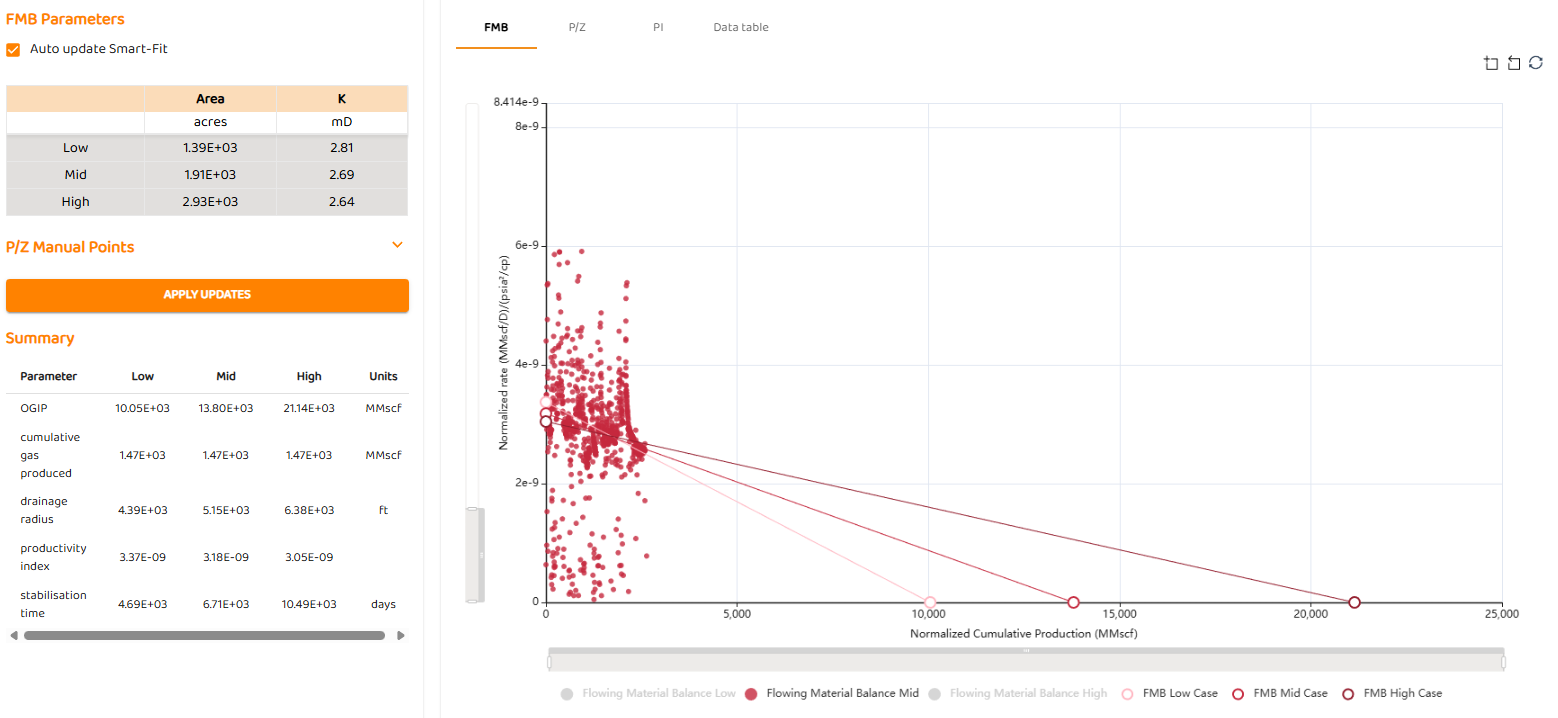
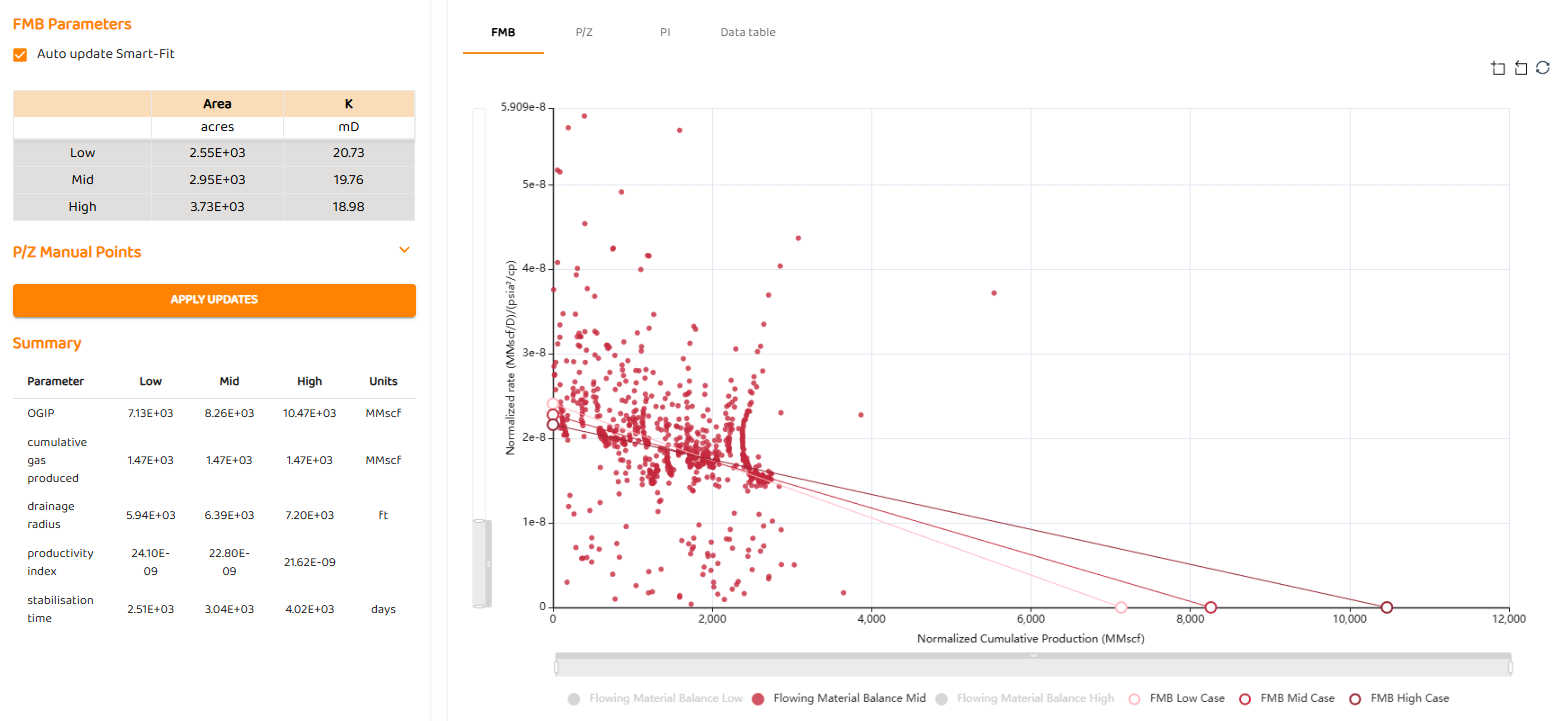
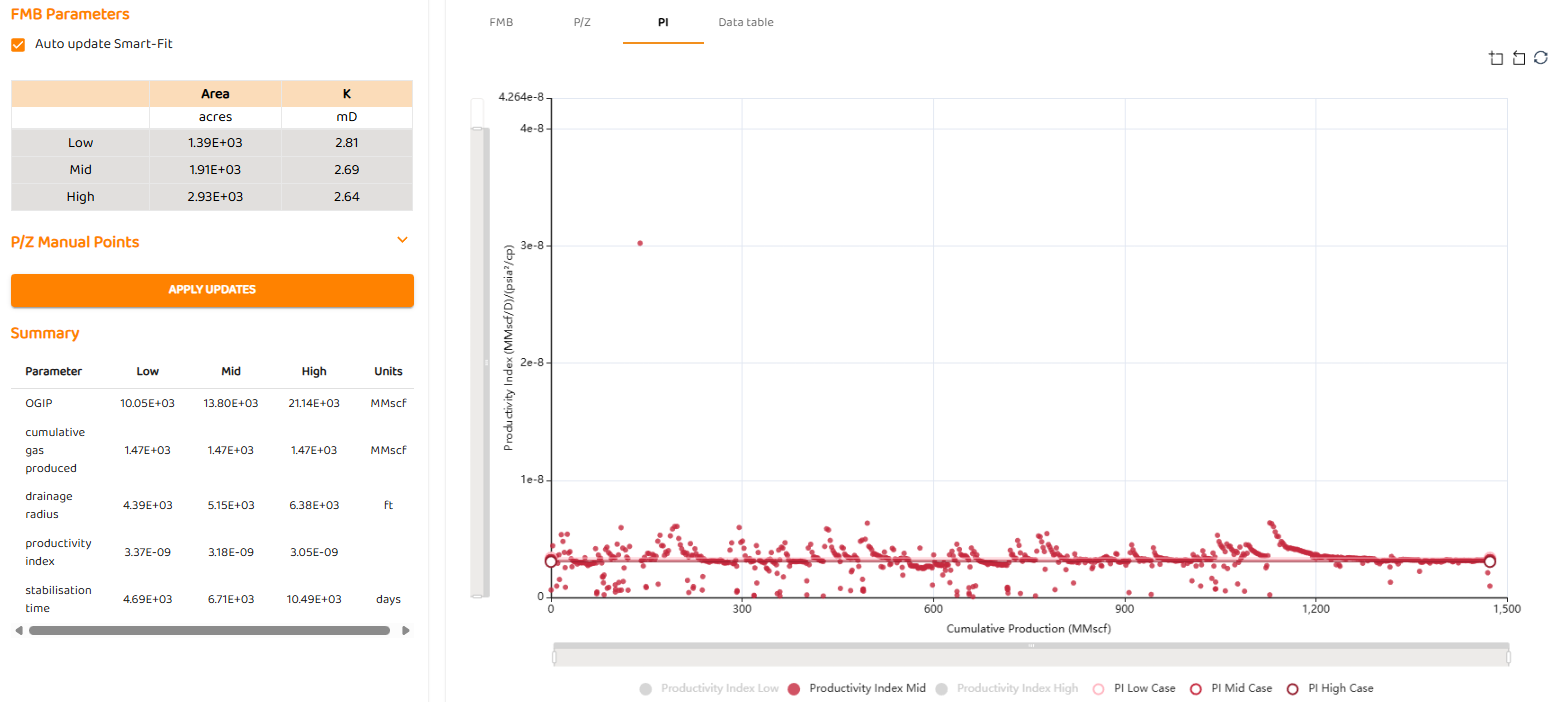
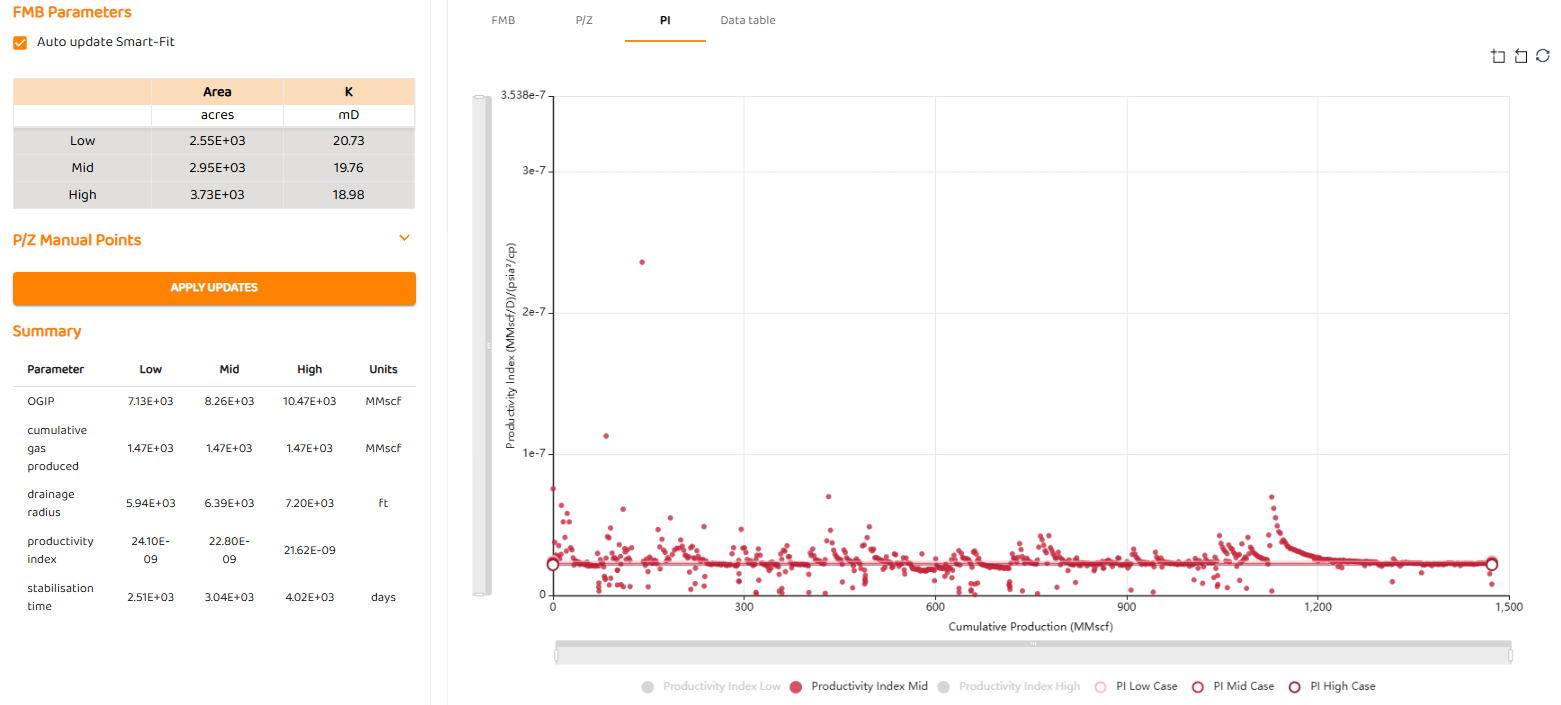
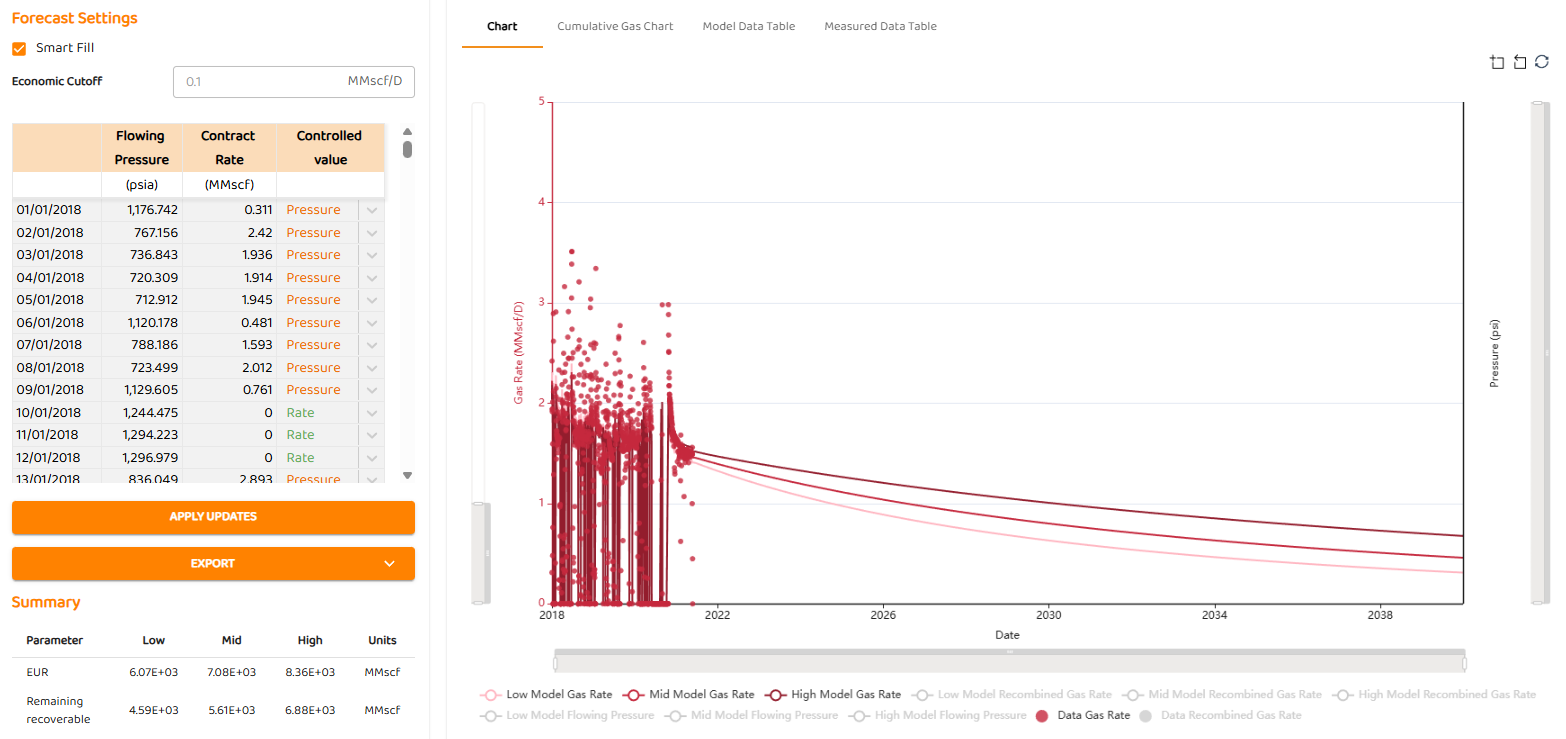
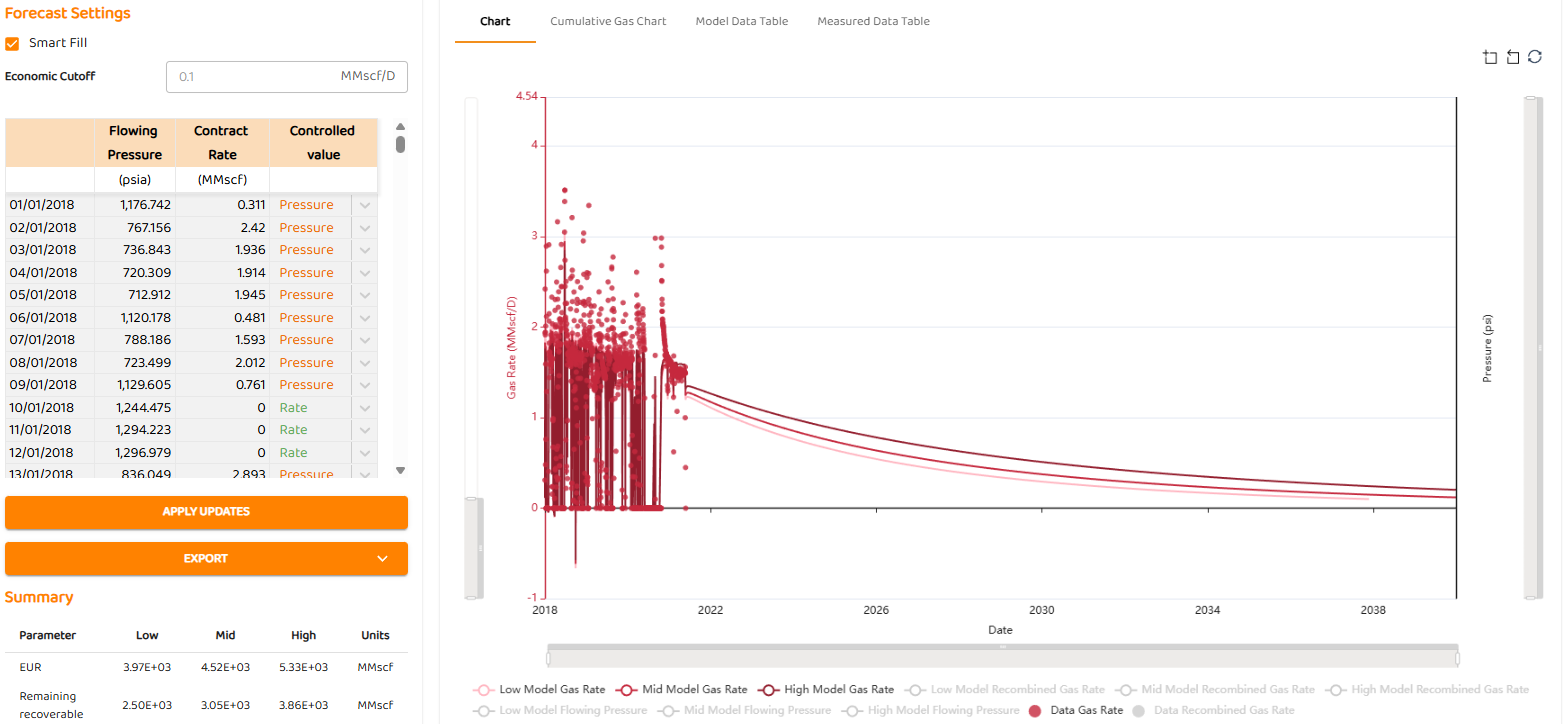
In this example below, Flowing Material Balance was performed on a deep Triassic well (daily rates and pressures). Changing initial pressure from 3,000 to 1,500 psia has reduced both estimated OGIP and Remaining Recoverable (i.e, the forecast).
|
Example 1: Initial Reservoir Pressure = 3,000 psia |
Example 2: Initial Reservoir Pressure = 1,500 psia |
|---|---|
|
|
|
|
|
|
|
|
|
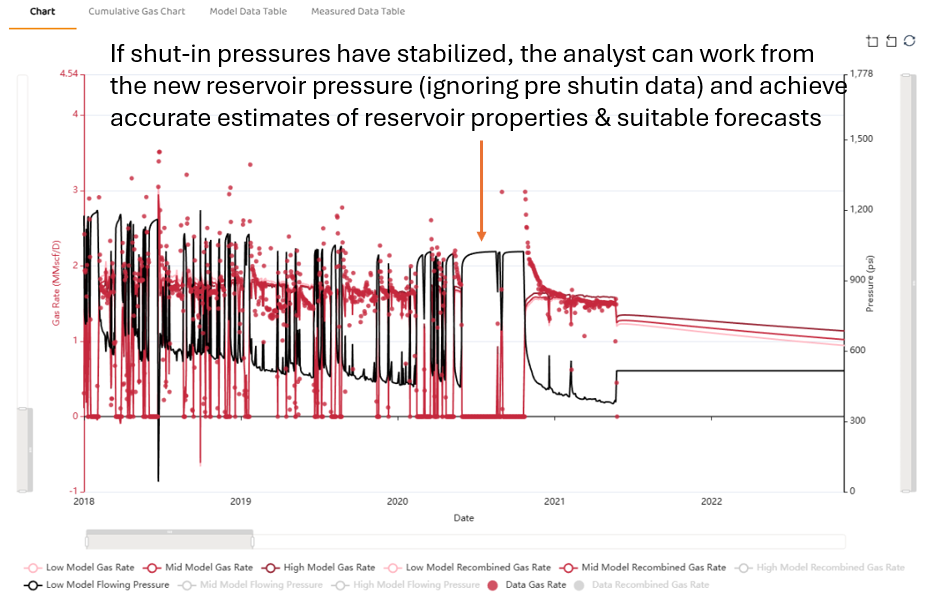
“Resetting” the Reservoir
If a well has been shut-in for a reasonable amount of time for reservoir pressure to stabilize, then the analysis can be performed using the current reservoir pressure = Pi.
All data prior to this shut-in can be ignored, and the analysis only performed on the post shut-in data. In this example, the OGIP calculated in early 2021 will be different than the OGIP calculated based on data from 2018, but all other calculations are reliable.