Introduction
In autoRTA, the user has a number of options for using various pressure types, and calculations
There are two main options which are:
-
Flow Pressure Type (or source). Refer to Types of Pressures for additional detail
-
Wellbore Model
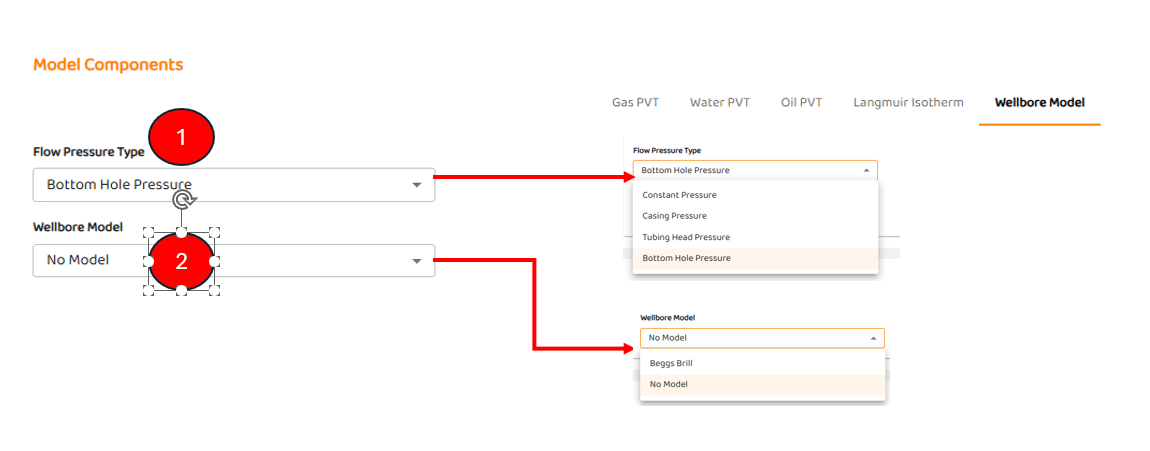
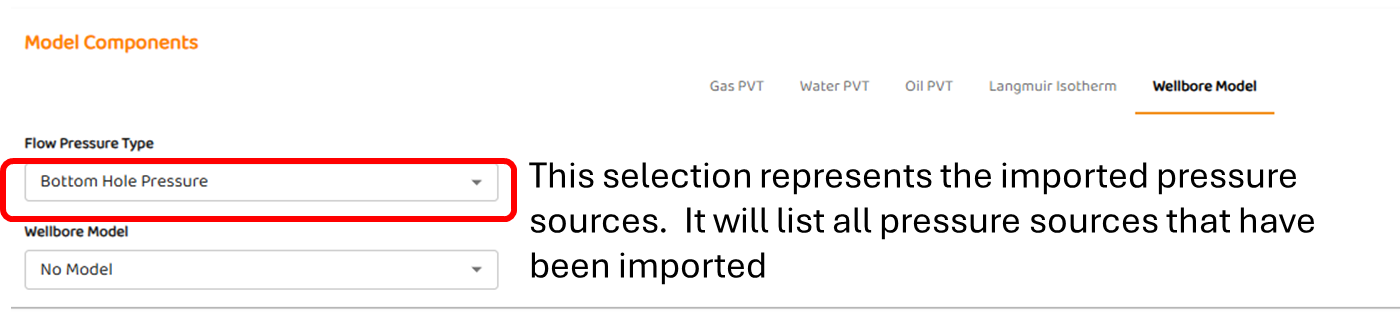
Flow Pressure Type:
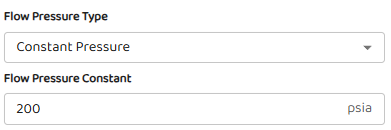
Most pressure sources are imported with the production data via either Import Wells option, or the AFADatabase Integration Capabilities which may include Tubing, Casing, PDHG, PIP, and more. However, a user can override these imported values and use single custom value for particular dataset. In the plots shown below, the user has chosen a manual input “Constant Pressure“ of 200 psia.
Wellbore Model
Currently, there are two types of wellbore available:
-
No Model - Assumes what ever pressure type or source is selected, this pressure is representative of the wellbore pressure at sandface.
-
Beggs & Brill Multiphase Wellbore Flow - A empirical model for multiphase flow in a closed conduit. For details of this model and its options are shown below:
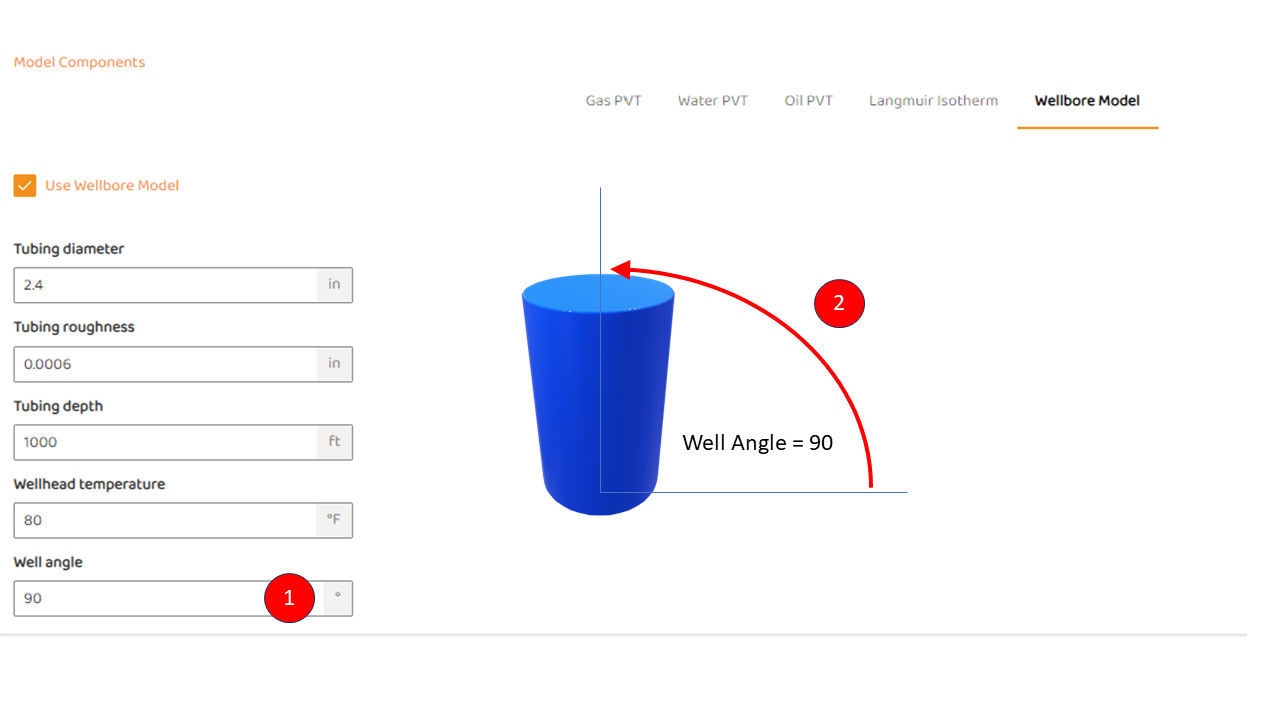
It is important to note that the “Well Angle“ is measured from the horizontal axis as demonstrated in the image below:
The flow model, whether Beggs & Brill or similar models, generally take the following parameters
-
Tubing Diameter: The Internal Diameter (ID) of the flow path
-
Tubing Roughness ; The unevenness of the surface of the tubing.
-
Tubing Depth: The length of the tubing, or a point within the wellbore to which a surface pressure to be converted. This can also be any distance including the depth from a pump intake pressure to MPP or similar.
-
Wellhead Temperature: Average or typical temperature at well.
-
Well Angle, the angle of the wellbore relative to the horizontal (see below)