
Thermogenic
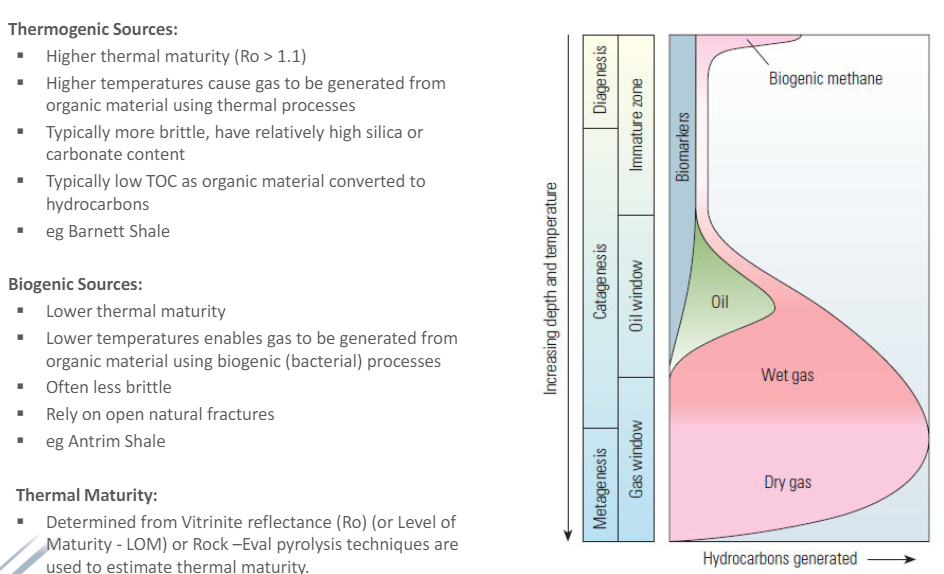
Thermogenic gas is derived from the thermal decomposition of deeply buried organic material as a result of geologic processes and time frames. The main by product of this degradation process is methane which is formed by microbial fermentation and carbon dioxide reduction. Thermogenic gas can also produce natural gas liquids with methane - which add value to production.
Biogenic
However, biogenic gas is derived from the microbial decomposition of organic material. Under anoxic conditions, Methanogenic bacteria that ferment organic matter thrives to produce hydrogen and carbon dioxide. Then the hydrogen is consumed by sulfate reduction until much of the sulfate is gone, after which methane is generated, creating a free gas phase. Since this process is biological it only takes place at low temperatures at which bacteria can survive, that is above the pasteurization temperature of around (or less than) 75 - 80°C (shallow depths of less than 120 m?). Generally speaking, no liquids are produced with thermogenic gas.
General requirements for formation of Biogenic gas are:
-
Anoxic Environments
-
Low Sulphate Concentration
-
Abundant Organic Matter
-
High pH,.
Other Comparisons
Since the depth of burial is correlated to subsurface temperature, oil and gas are produced at particular depths where the temperature is conducive to petroleum generation. In petroleum basins, heavy oil is typically found in shallower depths where the subsurface temperature is relatively low. Light oil is found at further depths as the temperature increases. “Oil window” refers to a depth interval, approximately ranging
from few thousand feet to about 10,000 ft.,
Amounts
In 1993, Rice estimated that Rice that as much as 20% of the world's natural-gas resource have been generated by the decomposition of organic matter by anaerobic microbes at low temperatures. Based on such estimation the Biogenic Petroleum Systems could be a very valuable resource not only for its reserves volume.
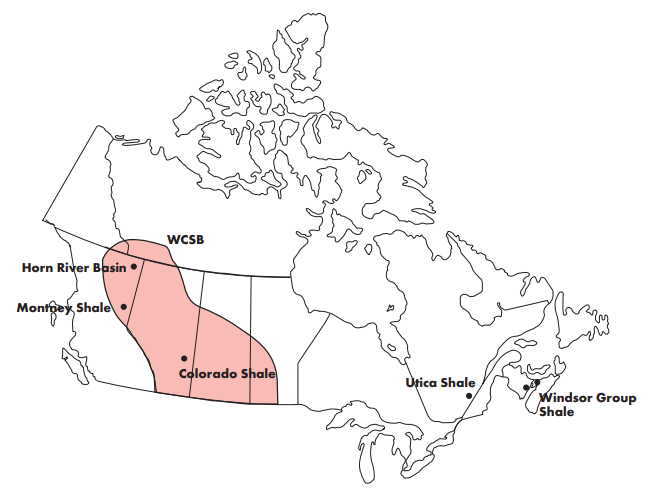
The Colorado Group, a shale play in Canada, is an example of gas production from biogenic origins. This would suggest very low potential for natural gas liquids (and of course, it is an underpressured reservoir, which is more difficult to hydraulically fracture. - it is a very shallow play of
References:
-
Hunt, J.M., 1995, Petroleum Geochemistry and Geology (Second Edition). W.H. Freeman And Company. 743 p.
-
Rice, D. D., 1993, Biogenic gas: controls, habitats, and resource potential, in D. G. Howell, ed., The Future of Energy Gases - U.S. Geological Survey Professional Paper 1570, Washington, United States Government Printing Office, p. 583-606.
-
Speight, G. J. Deep Shale Oil and Gas, 2017, Gulf Professional Publishing
-
Schoell, M., 1988, Multiple origins of methane in the earth: Chemical Geology, v. 71, p. 1-10.
-
Bustin, M. 2001, Geology and Some Engineering Aspects of Coalbed Methane, University of British Columbia Manual
-
Barker, G, Optimal, Shale Gas Evaluation Methods, IBC 3rd Annual Shale Gas Conference, Singapore, 29 November 2012.
-
Satter, A., and M. Iqbal, G. Reservoir Engineering The Fundamentals, Simulation, and Management of Conventional and Unconventional Recoveries. Elsevier, 2016.